Showing posts with label Parenting Strategies. Show all posts

Friday, September 1, 2017

How to Teach an Infant to Read: Symbol Recognition

I'm of the mindset that it is never too soon to get our children moving in the right direction. There's a study by Anderson, Wilson and Fielding (1988)[1] which shows how an increase in reading corresponds to higher academic achievement. The figure illustrates that children who read an average of less than 1 minute a day score in the 20th percentile. That means that for every 100 students taking the test, these children score better than 20. This also means that 80 students score higher than them. By contrast, children who read 65 minutes a day score in the 98th percentile. That means that for every 100 students taking the test, these children score better than 98 other children. This also means that only 2 students score higher than them. So, we can give our children a tremendous advantage just by helping to foster in our children a love of reading and ensuring that they read each day.


Here are a few quick strategies that we can use with our infants to give them a head start on reading.

Recognizing and Identifying Symbols. Most of us easily identify the skull and crossbones or the bullseye as symbols. However, letters are symbols too. "D" is as foreign to a person who does not read English as "γ" is to a person who does not read Greek. Because children are not born English readers, the symbols that we call letters are foreign to them at some point.

When should we start? This activity is aimed at giving our children a head start on recognizing and identifying the symbols we call letters. If we wait until they get to school to start, it is too late. Once a child is able to open his eyes and follow the direction of your hand, you can begin. In my experience, this happens between the first and second month.

What do we do? Prepare 26 "flash cards" each with a single letter on it. The letter should be printed as large as possible. Although I call these flash cards, I recommend using a single sheet of 8.5" x 11" paper. Do not use fancy colors, fonts or graphics. Print black letters on white paper. The size and contrast is intended to help children to focus on the letters.

If your child is able to sit up facing you, then sit face to face. If not, then sit with your child in your lap. Go through each of the 26 letters one at a time. When reviewing each letter repeat the letter at least twice, and preferably three times. Trace the letter at least one of those times. For example: a mother might say "A" while tracing the letter. She repeats "A" while tracing the letter. She repeats a third time, "A" while tracing the letter. She then points to the letter and says, "This is the letter 'A'."

It should take no more than 10 minutes or so to work through all 26 letters. Repeat this 3-4 times a week for 3-4 months.

How do I know if it is working? When reviewing the letters, look for your child's responsiveness. Your infant will follow your hand as you trace the letters. He will look at the letters and look at you. As he gains dexterity with his hands, he will reach out towards the letters. Help him to trace them, if you would like. Over time, you will notice that your infant takes note of letters in other spaces. He may notice signage that is posted in public spaces. He may notice lettering on articles of clothing. These are all indications that he is recognizing these new symbols.

Most importantly... Enjoy this time and activity with your child. It is an important and invaluable use of time. It is also fun! You are working towards giving your child a gift that will put them in the 98th percentile of their peer group. It will also give you 65 minutes of quiet time every evening... And it is free! That’s what I call a win! Read more about the benefits of increased reading here.

And as always... Have Fun!


Jomo W. Mutegi, Ph.D. is an author of science-related children’s books, and an Associate Professor of Science Education at the Indiana University School of Education in Indianapolis. He is also Principal Investigator of the (ES)2 Research Program. To learn more about Dr. Mutegi’s books, visit www.JomoMutegi.com. To learn more about Dr. Mutegi’s research, visit www.ES2RP.org.


[1] Anderson, R. C., Wilson, P. T., & Fielding, L. G. (1988). Growth in Reading and How Children Spend Their Time Outside of School. Reading Research Quarterly, 23, 285-303.

Friday, July 1, 2016

Courage, Dignity and the Parenting of Black Children: Part Four

Reason #4: We are often ashamed of our condition as a people.

“I am flawed”
“I am weak”
“I am ugly”
“I am evil”
“I am not good enough”
“I am insignificant”
“I am unwanted”
“I am worthless”

These are the types of statements that reflect a mindset riddled with shame. These statements also reflect the constant messaging that we as parents (and our children) receive about ourselves as African people.


Guilt is the emotion most people feel when they believe that they have done something bad. Shame is the emotion most people feel when they believe that they are something bad. In the world we live in currently, shame is deeply implanted in our psyche as people of African descent. We are constantly told how inadequate we are: how we are poorer than everyone else; how we are less educated than everyone else; how we are more criminal than everyone else; how we have fewer marriages than everyone else. Even so-called compliments are many times little more than veiled insults. “Oh, I just love Edward. He’s so articulate.” Translation: “Edward is Black, and he can speak English.” What this also means is that we cannot speak as well as everyone else.

The reality is that we should feel neither guilty nor ashamed, in response to these half-truths. If we are poorer than anyone, it is because in the job market we are constantly exploited. We are not hired at the same rates, neither are we paid the same amount as others, even when we are more qualified.

If we are less educated than anyone, it is because in the public school system we are constantly exploited. Our schools are funded at lower rates than others even when they draw from the same tax base. Our children are suspended and expelled more frequently even when they commit less egregious offenses. Our children are given fewer educational opportunities, even when they demonstrate the same academic potential.

If we are more criminal than anyone, it because in the criminal injustice system, we are constantly exploited. We are more likely to be victims of police brutality, and we are more likely to receive excessively harsh sentences.

The complete truth is that whites have created a world that is structured to make us poor, keep us uneducated, criminalize us, and in many other ways stifle our potential. And as an additional indignity, they convince us that we are at fault for the condition that they have created. However, in spite of their misdeeds, we still survive and a few of us even thrive. We have agency. We are not helpless people. Just as hard as others work to keep us poor, we can work to reclaim our wealth. Just as hard as others work to keep us uneducated, we can work to realize our inherent genius. Just as hard as others work to criminalize us, we can shine the light of truth on the real criminals.

If there is one thing that I could impress upon you (and one thing that you should impress upon your children), it is that we should not internalize these negative criticisms. We should hold our heads high, with the knowledge that our circumstances do not define us. We should hold our heads high, with the knowledge that if we are not watchful, the evil-doers are always ready to do evil.

Knowing that there are others working to instill a spirit of shame in our children, we should work that much harder to instill them with a spirit of dignity and pride. We cannot sugarcoat the reality of racism. Tell the truth and shame the devil. Otherwise, our children will be the ones living with shame.

And as always... Have Fun!


Jomo W. Mutegi, Ph.D. is an author of science-related children’s books, and an Associate Professor of Science Education at the Indiana University School of Education in Indianapolis. He is also Principal Investigator of the (ES)2 Research Program. To learn more about Dr. Mutegi’s books, visit www.JomoMutegi.com. To learn more about Dr. Mutegi’s research, visit www.ES2RP.org.

Wednesday, June 1, 2016

Courage, Dignity and the Parenting of Black Children: Part Three

When my son was in pre-k, his mother and I made the mistakes of enrolling him a very expensive (mistake #1) all white (mistake #2) school. His time there was horrible for all of us. He was regularly accosted by his 4- and 5-year-old peers. They teased him about his complexion, about his hair texture, and about the way he spoke. His teachers offered no support whatsoever. He fought often, only to be chided by the teachers for not “using his words.” On one occasion he told his teacher that, “those words aren’t working.” All I could think when I learned of that response in a parent teacher conference was, “Good for you!” Needless to say, we made a hasty exit from that hot mess of a so-called school.

For a number of years after that experience, my son would often ask, “Why did the kids at ‘Hot Mess of a So-Called School’ make fun of me?” This is the point at which many parents fold. This is also reason #3 that many of us as Black parents do not teach our children about racism.


Reason #3: I don’t know what to tell them.
The reality is, we do know what to say. We are just afraid to say it. Remember, ultimately most of us avoid discussion of racism out of fear and shame. We should not be ashamed of the truth. These are our children. We owe them truthful representations of the world in which we live. Fortunately, we have a number of resources that we can use to help us say what we are uncomfortable saying.

First, there are documentary and film resources. There are a few films that all Black parents should watch with their children. Here are five of these must watch films.
  • Roots – I can speak definitively about the version with LeVar Burton as Kunta Kinte. I have not yet seen the new version.
  • Ethnic Notions – This is a documentary narrated by Esther Rolle, which reviews the popular archetypes that are used to misrepresent people of African descent in media.
  • Marcus Garvey: Look for Me in the Whirlwind
  • Black Wall Street – Tulsa Oklahoma
  • Racism: A History – This is a three-part BBC documentary series that originally aired in 2007.
There are many more good films, but these five provide a nice start. As you watch these films with your children resist the temptation to justify the misbehavior of the white antagonists. These are factual retellings of history. Help your children to become familiar with these historical figures and events. This will give them a context for understanding the racism that they are likely to see in their own lives.

Second, there are book resources. Here again there are too many books to list them all. So, I will suggest five that will give parents a start.
  • The Autobiography of Malcolm X – Alex Haley
  • Black Spark, White Fire – Richard Poe
  • Negroes with Guns – Robert F. Williams
  • The Irritated Genie – Jacob H. Carruthers
  • The Miseducation of the Negro – Carter G. Woodson
These books are written in straightforward and easy to understand styles. I have read at least 3 of these books with middle school-aged children. As you read these with your young readers, be sure to encourage questions. Also, stop and take time to talk through particular details of the text.

Third, there are museum resources. My wife and I like to visit museums. When we travel, we often look for local museums to visit. We have visited the Underground Railroad Museum in Cincinnati on at least two occasions. When we were there, we could not find one mention of Nat Turner or Harriett Tubman. You cannot credibly talk about the history of enslaved Africans fighting for freedom without at the very least covering the work of Nat Turner and Harriett Tubman. I say this to emphasize that many “African American” history museums are set up as propaganda tools against us. So here are a few that we have found, which provide a consistently accurate and useful presentation of African people.
  • The Great Blacks in Wax Museum – Baltimore, MD
  • Lest We Forget Black Holocaust Museum – Philadelphia, PA
  • DuSable Museum of African American History – Chicago, IL
  • Muhammad Ali Center – Louisville, KY
If you know of any other good museums, let me know. I will work to visit them and add them to the list. As you begin to have these discussions with your children, write back and let me know how things go. Also, be sure to visit the Black Kids Read Bookstore. Take a look at our growing library of books written specifically for Black children.

And as always... Have Fun!


Jomo W. Mutegi, Ph.D. is an author of science-related children’s books, and an Associate Professor of Science Education at the Indiana University School of Education in Indianapolis. He is also Principal Investigator of the (ES)2 Research Program. To learn more about Dr. Mutegi’s books, visit www.JomoMutegi.com. To learn more about Dr. Mutegi’s research, visit www.ES2RP.org.

Sunday, May 1, 2016

Courage, Dignity and the Parenting of Black Children: Part Two

I was at a luncheon not long ago and there were several African American parents sitting at my table. The discussion moved to a recent racially charged event that had been in the news. After some time, one of the parents asked the group, "How have you all discussed this event with your children?” A few of us shared our approaches for addressing racism with our sons and daughters. What really surprised me, however, was the number of parents who said that they don't talk about racism with their children at all. One of the parents asked me, "Jomo, do you think I should teach my daughter about racism?"

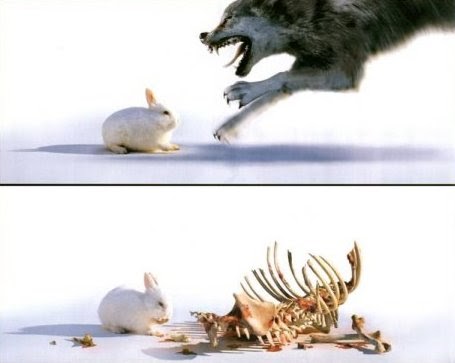
The question reminded me of a proverb that a friend once shared. He said, "A mother rabbit has to teach her baby bunnies about being a rabbit. But she also has to teach them about the wolf." This simple proverb makes the answer very obvious. If we want our children to survive and to thrive in this life, we certainly have to teach them about racism!

“Should we talk to our children about Racism?” If we love them, we will!

I believe there are two core reasons that we as Black parents avoid teaching our children about racism: fear and shame. People do not typically admit to being fearful or ashamed. There are four other reasons often given for not dealing with racism. As we strive to parent with courage and dignity, we should be aware of these four reasons, and find better reasons to face our fears. I addressed the first reason last week: I do not want to teach my child to hate white people. This week I will exam the second reason.


Reason #2: I hope that things will change.
I had a doctoral student who spent a number of years working as an engineer for a government agency. One day over lunch, I asked her why she left her engineering career to pursue a doctoral degree. She explained that the racism she faced every day on her job was unbearable. As she shared some of the incidents of racism, she also pointed out that her father had worked in that same department for most of her life. She could not understand why he had not prepared her for the type of racism she would face as an adult. When asked about this, her father replied, “I had hoped things would change by the time you were an adult.”

Hearing this we both shook our heads and agreed that, hope is not a strategy. I don’t need to recount the history of Africans suffering at the hands of whites. I will say however, that it has lasted for nearly 500 years. We are not going to wish it away in the 10 to 20 years, while our children transition from childhood to adulthood. More important than that, racism does not have to be eliminated in order for our children to thrive. But our children do need to develop strategies for navigating racism in institutions in order to thrive.

We can all help our children to navigate these institutions. Here’s how. First, be honest about the prevalence of racism. Don’t paint the world full of rainbows and unicorns. They will not believe you and you will lose credibility. Our children watch television. They listen to music. They go to school every day, and they watch us. They are very aware of racial bias and disparity. We can help them to recognize racism in specific acts and practices. We can help them to make sense of their experiences with racism. We can even teach them how to respond to racist assault. The one thing we cannot do is pretend that it does not exist.

Second, share your strategies for dealing with racism. Be honest about those strategies that worked and those that have not worked. Stories are powerful and memorable tools for teaching. Your “war stories” will be very useful points of reference for your children. They will encounter similar people and similar situations. Your stories will help them to avoid a good number of pitfalls.

Third, model the process of fighting racism by doing it with them. As your children are growing, they will have conflict some of which will be race-based conflict. You too will have conflict. It might be in a school, in the community, in a store or a restaurant. If it is safe and reasonable, have your children standing by your side when you address it. Children will learn a great deal by watching us. They will develop a sense of when to be the nice guy, when to raise their voice, when to go over someone’s head, when to call folks out, and when to use allies. Let them see your complete toolkit, and when the time is right, explain to them what you are doing (or what you did) and why.

I know the feeling of helplessness that confronts us. Sometimes it feels as though the weight of a whole society is against us. In those times it is easy to feel defeated. It is easy to rely on hope. But we are not a helpless people. Our whole history is a history of overcoming tremendous odds… and winning. We need to immerse ourselves in stories of victory, both real and imagined!

The Black Kids Read books and curriculum products are a very useful in this respect. Many of our stories feature Black families working together to address problems in Black communities. One example can be found in the series, Rebekah’s Healing Garden. In this series the main character, Rebekah, learns that she lives in a food desert. So she works with her parents and grandparents to start a garden in order to provide fresh produce for the neighborhood. This is a simple story. That helps our children see that they too can identify and solve problems facing our community. You will love this resource! Learn more about this series at the Black Kids Read website or visit BKR Books to purchase these titles.

And as always... Have Fun!


Jomo W. Mutegi, Ph.D. is an author of science-related children’s books, and an Associate Professor of Science Education at the Indiana University School of Education in Indianapolis. He is also Principal Investigator of the (ES)2 Research Program. To learn more about Dr. Mutegi’s books, visit www.JomoMutegi.com. To learn more about Dr. Mutegi’s research, visit www.ES2RP.org.

Saturday, April 2, 2016

Courage, Dignity and the Parenting of Black Children: Part One

I was at a luncheon not long ago and there were several African American parents sitting at my table. The discussion moved to a recent racially charged event that had been in the news. After some time, one of the parents asked the group, “How have you all discussed this event with your children?” A few of us shared our approaches for addressing racism with our sons and daughters. What really surprised me, however, was the number of parents who said that they don't talk about racism with their children at all. One of the parents asked me, “Jomo, do you think I should teach my daughter about racism?”

The question reminded me of a proverb that a friend once shared. He said, “A mother rabbit has to teach her baby bunnies about being a rabbit. But she also has to teach them about the wolf.” This simple proverb makes the answer very obvious. If we want our children to survive and to thrive in this life, we certainly have to teach them about racism! 


Many of the parents who avoided discussing racism with their children gave reasons for their avoidance. But what I learned from that lunchtime conversation was that all of the reasons given, ultimately came down to fear and shame. This blog is about parenting with courage and with dignity. Over the next four months, I will share four of the specific reasons parents gave as well as a few encouragements. My hope is that parents in the BKR Family will overcome fear and shame to courageously and with proud dignity address the realities of racism. We do not only want our children to survive, we want them to thrive. I will also point out ways that Black Kids Read books and curriculum products can support parents and children in learning to successfully navigate racism in our society.

Reason #1: I do not want to teach my child to hate white people.
In our popular discourse, “hate” gets a bad rap. Hatred is a normal human emotion like love, fear, joy, apprehension, and excitement. All of these emotions serve valuable functions in our survival. Where hatred is concerned, humans typically hate those things that are detrimental (or appear to be detrimental) to us. Conversely, we typically love those things that are beneficial (or that appear to be beneficial). That being said, we cannot teach an emotion. We can (and should) help our children to identify benefits and detriments. Whether or not our children develop an emotional response to those benefits and detriments is out of our hands.

You might also have noticed that as people have less control in a situation, they tend to have stronger emotional reactions. This is especially important for parents who don’t want their children to grow up “hating white people.” One way to position our children not to have strong negative emotions towards whites, is to teach them strategies that will help them to (a) understand and anticipate the behavior of whites, and (b) have a high degree of control over their own lives (and self-determination) where whites are concerned.

The Black Kids Read books and curriculum products are a very useful starting point for teaching these strategies. All of the products include a component aimed at helping children to think about the challenges facing Black communities as well as ways that they can exert maximum control over their own lives. One example can be found in the series, Kayla’s First Chickens. In this series the main character, Kayla, learns that she can actually raise and process chickens for herself. Children reading this series should be encouraged to consider ways that they (like Kayla) can control their lives even in the face of challenges that they may face. Each book also provides parents discussion questions that push children to think more deeply. Learn more about this series at the Black Kids Read website or visit BKR Books to purchase these titles. As you begin to have these discussions with your children, write back and let me know how things go.

And as always... Have Fun!


Jomo W. Mutegi, Ph.D. is an author of science-related children’s books, and an Associate Professor of Science Education at the Indiana University School of Education in Indianapolis. He is also Principal Investigator of the (ES)2 Research Program. To learn more about Dr. Mutegi’s books, visit www.JomoMutegi.com. To learn more about Dr. Mutegi’s research, visit www.ES2RP.org.

Monday, December 24, 2012

My Christmas Rebellion

 My Christmas Rebellion. Many of my friends and family members know that I no longer "celebrate" Christmas. Or as I call it... "The Merry Mess." My Christmas rebellion has occurred in stages, and it has included multiple incidents that covered several years. I don't want to get into the reasons for my rebellion, though I am sure that you could guess many of them. (If you are interested, read Barashango's Afrikan People, European Holidays). What I do want to do is share one good idea that came from one rebellious incident.

One Rebellious Incident. When my son was about 5 (maybe 6, I can't remember), we were preparing for a Merry Mess hell-ebration... (pardon me) ...celebration... when I asked him, "Do you remember the dart set I got you last year?" He looked at me sadly and said, "Yeah Dad, I remember it, but I never got to play with it. I had too many other gifts to open and to play with..."

I don't know where the conversation went from there. It didn't really matter. What occurred to me was yet another absurdity of the Merry Mess. We give children so much junk... (oops!) ...We give children so many gifts that they don't have time to truly appreciate them. So this spawned the idea that I will share.

The One Good Idea? From this point on (or at least until I abandoned the Merry Mess all together), I opted out of the gift giving except for one "special gift." The "special gift" was accompanied with much fanfare. After all it was a special gift. The "special gift" was a lesson on a topic of his choosing. The first year he wanted to learn to shoot a bow and arrow. The Lord of the Rings was out that year and he had aspirations of Logalos-like heroics. So, for the cost of a Jr. Archery Set and a foam target. This gift gave us an enjoyable activity that we were able to share year round ever since.

A Few More Ideas. What special gifts or lessons can we as parents, aunts, uncles, grandparents, teachers and family friends give to the children in our care? We can teach a child to... change oil in the car, bake a pie, write a letter to a relative, arrange a floral bouquet, host a dinner party, build a bookcase, hang a picture, make strawberry jam, pitch a tent, stitch a hem, or any one of thousands of other practical hands-on skills. Have Fun!


Jomo W. Mutegi is a husband and father committed to the improvement of the African world community, an author of science-related children’s books, and an Associate Professor of Science Education. To learn more about Jomo’s children’s books, visit www.JomoMutegi.com. To learn more about Dr. Mutegi’s research visit www.ES2RP.org.

Sunday, November 4, 2007

What's the Use of College?

As millions of young adults head off to college, I am reminded of a disagreement that my father and I often have about the utility of college. Like most Americans my father has been misled about the primary function of colleges and universities. Whenever we see some public official (or private one) do something inane, my father exclaims, “You would think a college educated person would know better.” To which I respond, “Pops, college doesn’t make you smart.”
 
https://i0.wp.com/defendernetwork.com/wp-content/uploads/2017/01/graduation-cap-on-top-of-pile-of-money_573x300.jpg?fit=800%2C419&ssl=1
 
What is ironic about this exchange is that my father, who is one of the smartest and most well-read men I know, never finished college. I on the other hand spent most of my adult life in college: eight years as a student and ten years as a professor. So, I’ve met enough college educated people to conclude that college doesn’t make you smart. This, however, never seems to convince him.
 
To win the disagreement I sometimes remind him that he never went to college, but he has been able to advance himself over many of his college-educated peers. “Yeah, well what’s your point?” he might grumble.
 
“My point is that college doesn’t make you smart.”
 
To which he responds with a defeated sigh, “Well it should.”
 
So, for my father and those of his generation that sometimes get caught living in the world that should be, rather than in the world that is, I’ve decided to share a few myths and realities of college and also to provide five guidelines that will help students to maximize their college experience.
 
The first myth of college is that the longer you go, the wealthier you will become. College is not a place where you go for four years to become a millionaire later in life. Despite the fact that college marketing programs and admissions officers sell a four-year degree as a vehicle to wealth, the world’s wealthy are not wealthy by having gone to college. Forbes magazine publishes a recurring issue in which they profile the world’s wealthiest people. They call the list the Forbes 400. In the October 2005, issue eight of the top twenty wealthiest people (40%) had no degree higher than a high school diploma; and four of the top five wealthiest people (80%) were college dropouts. Similarly, the authors of the book, The Millionaire Next Door point out that because college graduates spend at least four years in college making debt rather than money, they begin their working lives four years behind their peers and tens of thousands of dollars in the hole. While college graduates do earn slightly more that non-college graduates for doing a similar job, that difference in income is not great enough to warrant taking on great debt. This leads us to guideline #1, be frugal. Avoid student loans wherever possible. Do not accept credit cards or other lines of credit for unnecessary items. There are untold thousands of college graduates who are mired in debt accumulated during college for frivolous expenditures. Avoid this situation at all costs.
 
The second myth of college is that it prepares you for the workforce. Despite the fact that college marketing programs and admissions officers sell a four-year degree as a vehicle to a great job, only in rare instances do four-year degrees correspond to great jobs. In this respect, students who earn engineering, education, and nursing degrees are in luck. However, students who earn degrees in business management, chemistry, English, finance, history, professional writing, safety management, anthropology, biology, criminology, entomology, geology, philosophy, plant pathology, psychology, family and consumer sciences, neuroscience, soil science, wood science, legal studies, liberal studies, religious studies, social studies, women’s studies (you get the point), will have greater difficulty.
 
Unless students in majors such as these plan to pursue master’s or doctoral level work, they are often compelled to work “out of field.” Instead, most employers invest substantial amounts of time, money and other resources, preparing entry level employees to do a given job. They spend even more resources training established employees for improved performance and advancement.
 
This leads us to guideline #2, plan your career path. After having identified “what you want to be when you grow up.” Talk to “grownups” in that line of work to find out what the best academic preparation is for that type of work. In many career fields, the discipline a worker studies in college is incidental. In other fields background knowledge of a different disciplinary area is extremely advantageous though not necessary. For example, a journalist with background knowledge in genetic engineering has a unique advantage over the average journalist. The idea here is to be proactive and thoughtful in mapping a career path. College plays a very small role in preparing you for the workforce.
 
I can hear some hostile dissenter now. “Well Mr. Smarty Pants, if college won’t help me to earn a million dollars and if it doesn’t prepare me for a job then what is the degree for?” I’m glad you asked. The first reality of college is that, if we complete it successfully, the best we get from it is a credential. This credential (which most people call a degree) is simply a ticket that allows us to begin doing something. A nursing degree would allow a person to begin a nursing practice. An engineering degree would allow a person to begin working as an engineer. A psychology degree would allow a person to begin studying more psychology at a higher level. The degree is simply a credential, nothing more and nothing less. As such it is a starting point. It is for this reason that the ceremony closing out one’s college experience is called “commencement.”
 
Understanding that the four-year degree is only a credential helps to make the next guideline more sensible. Guideline #3 is don’t let school interfere with your education. I first heard this admonition from a professor I had in graduate school. (I later learned that the quote is attributed to Mark Twain). During my first year as a doctoral student, I passed this professor on my way to class. He told me to join him as he was on his way to a lecture given by a Nobel Prize winning physicist who was visiting the university. “No,” I declined graciously. “I have a class to attend. To this he smiled and said, “Don’t let school interfere with your education. Class will be there next week with the same book and the same instructor. This physicist may never come this way again.” Thousands of students spend the greater part of their college lives with their heads buried in books. They miss out on campus events, lectures, plays, the development of friendships, parties, travel abroad and most of the educationally rich experiences that college life has to offer. In the end, they get the same credential that everyone else gets, nothing more and nothing less.
 
The second reality of college is that it is the best social networking institution available. It’s better than First Fridays, better than FraserNet, better than church, even better than Facebook, LinkedIn, and other social networking sites. Why is college better? The networking that takes place in college is better for several reasons. One reason it is better is because it does not feel or look like networking. It is place where genuine friendships (or at least associations) can be built without the specter of ulterior motives. Few college students would wonder, “Is this guy trying to be my friend simply to get my money?” While I realize there are exceptions, for the most part college students do not have any money. They do not yet have positions of privilege. They do not run powerful corporations. In fact, even if they did, their peers (other college students) are not typically in positions to take advantage of that money, privilege and power. For this reason, the relationships built during college tend to be more genuine. Another reason college networking is better is because in one place each student has access to thousands of people who will one day be well positioned in nearly every imaginable walk of life. It is not unreasonable for a college student to look up 10 years after graduation to realize that he has personal relationships with four professional athletes, two attorneys, three journalists (one of whom writes for a national publication), four college professors, three engineers, a federal lobbyist, and tens of other professional people.
 
What does this reality mean for today’s college student? This reality leads to guideline #4, build a strong social and professional network. One of the best uses of a students’ time is building strong genuine relationships with fellow students and maintaining consistent communication upon graduation. In this sense joining social organizations is important; volunteering for campus events is important; spending time in a friend’s dorm room in good conversation and uproarious laughter is important; going to movies together is important; visiting one another over spring break and during the summer is important. More than just being important, these types of activities are as important as (if not more important than) getting straight A’s. After 14 years of life post-college, no one has ever asked me what my grade point average was. However, I often rely on the friendships and associations I built while in college.
 
The third reality of college is that it avails us of opportunities that most people will not likely see again in life. Most college and university campuses have radio and television stations, offer study abroad programs ranging from one week to one year, have intramural sport teams, offer regular theater performances, have student governance associations, and have a wide range of clubs and interest groups. The beauty of these offerings is that students do not need any special training or certification for most of these offerings. All that is needed is an interest and a willingness to learn.
 
That being said, guideline #5 is Carpe Diem - Seize the Day (or seize the opportunities). For those who have not been there yet, I will tell you that life does not offer many opportunities to spend four months overseas. What is more, for most adults if the opportunity were there, responsibilities such as work, children, the house, car note, etc. would make it difficult to take advantage of the opportunity. Similarly, most working adults work very hard to find extra time to join sports teams, take martial arts, or try out for and perform in a play. Indeed, the freedom that college students enjoy and the availability of unique opportunities makes it an ideal time in life to learn new things, meet new people, and have rich, new experiences.
 
So, while college may not make you smart, a smart college student can certainly make the most out of her college experience. As June draws near and we look to next September, I encourage parents and students alike to make smart choices. Approach the college years not as a four-year race to be ended quickly, but as an opportunity to establish a foundation for long-term success.


Jomo W. Mutegi, Ph.D. is an author of science-related children’s books, and an Associate Professor of Science Education at the Indiana University School of Education in Indianapolis. He is also Principal Investigator of the (ES)2 Research Program. To learn more about Dr. Mutegi’s books, visit https://blackkidsread.org/. To learn more about Dr. Mutegi’s research, visit www.ES2RP.org.