Wednesday, June 1, 2016

Courage, Dignity and the Parenting of Black Children: Part Three

When my son was in pre-k, his mother and I made the mistakes of enrolling him a very expensive (mistake #1) all white (mistake #2) school. His time there was horrible for all of us. He was regularly accosted by his 4- and 5-year-old peers. They teased him about his complexion, about his hair texture, and about the way he spoke. His teachers offered no support whatsoever. He fought often, only to be chided by the teachers for not “using his words.” On one occasion he told his teacher that, “those words aren’t working.” All I could think when I learned of that response in a parent teacher conference was, “Good for you!” Needless to say, we made a hasty exit from that hot mess of a so-called school.

For a number of years after that experience, my son would often ask, “Why did the kids at ‘Hot Mess of a So-Called School’ make fun of me?” This is the point at which many parents fold. This is also reason #3 that many of us as Black parents do not teach our children about racism.


Reason #3: I don’t know what to tell them.
The reality is, we do know what to say. We are just afraid to say it. Remember, ultimately most of us avoid discussion of racism out of fear and shame. We should not be ashamed of the truth. These are our children. We owe them truthful representations of the world in which we live. Fortunately, we have a number of resources that we can use to help us say what we are uncomfortable saying.

First, there are documentary and film resources. There are a few films that all Black parents should watch with their children. Here are five of these must watch films.
  • Roots – I can speak definitively about the version with LeVar Burton as Kunta Kinte. I have not yet seen the new version.
  • Ethnic Notions – This is a documentary narrated by Esther Rolle, which reviews the popular archetypes that are used to misrepresent people of African descent in media.
  • Marcus Garvey: Look for Me in the Whirlwind
  • Black Wall Street – Tulsa Oklahoma
  • Racism: A History – This is a three-part BBC documentary series that originally aired in 2007.
There are many more good films, but these five provide a nice start. As you watch these films with your children resist the temptation to justify the misbehavior of the white antagonists. These are factual retellings of history. Help your children to become familiar with these historical figures and events. This will give them a context for understanding the racism that they are likely to see in their own lives.

Second, there are book resources. Here again there are too many books to list them all. So, I will suggest five that will give parents a start.
  • The Autobiography of Malcolm X – Alex Haley
  • Black Spark, White Fire – Richard Poe
  • Negroes with Guns – Robert F. Williams
  • The Irritated Genie – Jacob H. Carruthers
  • The Miseducation of the Negro – Carter G. Woodson
These books are written in straightforward and easy to understand styles. I have read at least 3 of these books with middle school-aged children. As you read these with your young readers, be sure to encourage questions. Also, stop and take time to talk through particular details of the text.

Third, there are museum resources. My wife and I like to visit museums. When we travel, we often look for local museums to visit. We have visited the Underground Railroad Museum in Cincinnati on at least two occasions. When we were there, we could not find one mention of Nat Turner or Harriett Tubman. You cannot credibly talk about the history of enslaved Africans fighting for freedom without at the very least covering the work of Nat Turner and Harriett Tubman. I say this to emphasize that many “African American” history museums are set up as propaganda tools against us. So here are a few that we have found, which provide a consistently accurate and useful presentation of African people.
  • The Great Blacks in Wax Museum – Baltimore, MD
  • Lest We Forget Black Holocaust Museum – Philadelphia, PA
  • DuSable Museum of African American History – Chicago, IL
  • Muhammad Ali Center – Louisville, KY
If you know of any other good museums, let me know. I will work to visit them and add them to the list. As you begin to have these discussions with your children, write back and let me know how things go. Also, be sure to visit the Black Kids Read Bookstore. Take a look at our growing library of books written specifically for Black children.

And as always... Have Fun!


Jomo W. Mutegi, Ph.D. is an author of science-related children’s books, and an Associate Professor of Science Education at the Indiana University School of Education in Indianapolis. He is also Principal Investigator of the (ES)2 Research Program. To learn more about Dr. Mutegi’s books, visit www.JomoMutegi.com. To learn more about Dr. Mutegi’s research, visit www.ES2RP.org.

Sunday, May 1, 2016

Courage, Dignity and the Parenting of Black Children: Part Two

I was at a luncheon not long ago and there were several African American parents sitting at my table. The discussion moved to a recent racially charged event that had been in the news. After some time, one of the parents asked the group, "How have you all discussed this event with your children?” A few of us shared our approaches for addressing racism with our sons and daughters. What really surprised me, however, was the number of parents who said that they don't talk about racism with their children at all. One of the parents asked me, "Jomo, do you think I should teach my daughter about racism?"

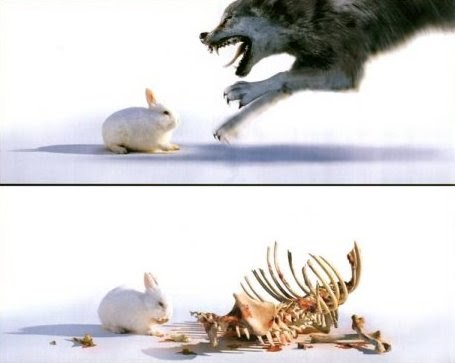
The question reminded me of a proverb that a friend once shared. He said, "A mother rabbit has to teach her baby bunnies about being a rabbit. But she also has to teach them about the wolf." This simple proverb makes the answer very obvious. If we want our children to survive and to thrive in this life, we certainly have to teach them about racism!

“Should we talk to our children about Racism?” If we love them, we will!

I believe there are two core reasons that we as Black parents avoid teaching our children about racism: fear and shame. People do not typically admit to being fearful or ashamed. There are four other reasons often given for not dealing with racism. As we strive to parent with courage and dignity, we should be aware of these four reasons, and find better reasons to face our fears. I addressed the first reason last week: I do not want to teach my child to hate white people. This week I will exam the second reason.


Reason #2: I hope that things will change.
I had a doctoral student who spent a number of years working as an engineer for a government agency. One day over lunch, I asked her why she left her engineering career to pursue a doctoral degree. She explained that the racism she faced every day on her job was unbearable. As she shared some of the incidents of racism, she also pointed out that her father had worked in that same department for most of her life. She could not understand why he had not prepared her for the type of racism she would face as an adult. When asked about this, her father replied, “I had hoped things would change by the time you were an adult.”

Hearing this we both shook our heads and agreed that, hope is not a strategy. I don’t need to recount the history of Africans suffering at the hands of whites. I will say however, that it has lasted for nearly 500 years. We are not going to wish it away in the 10 to 20 years, while our children transition from childhood to adulthood. More important than that, racism does not have to be eliminated in order for our children to thrive. But our children do need to develop strategies for navigating racism in institutions in order to thrive.

We can all help our children to navigate these institutions. Here’s how. First, be honest about the prevalence of racism. Don’t paint the world full of rainbows and unicorns. They will not believe you and you will lose credibility. Our children watch television. They listen to music. They go to school every day, and they watch us. They are very aware of racial bias and disparity. We can help them to recognize racism in specific acts and practices. We can help them to make sense of their experiences with racism. We can even teach them how to respond to racist assault. The one thing we cannot do is pretend that it does not exist.

Second, share your strategies for dealing with racism. Be honest about those strategies that worked and those that have not worked. Stories are powerful and memorable tools for teaching. Your “war stories” will be very useful points of reference for your children. They will encounter similar people and similar situations. Your stories will help them to avoid a good number of pitfalls.

Third, model the process of fighting racism by doing it with them. As your children are growing, they will have conflict some of which will be race-based conflict. You too will have conflict. It might be in a school, in the community, in a store or a restaurant. If it is safe and reasonable, have your children standing by your side when you address it. Children will learn a great deal by watching us. They will develop a sense of when to be the nice guy, when to raise their voice, when to go over someone’s head, when to call folks out, and when to use allies. Let them see your complete toolkit, and when the time is right, explain to them what you are doing (or what you did) and why.

I know the feeling of helplessness that confronts us. Sometimes it feels as though the weight of a whole society is against us. In those times it is easy to feel defeated. It is easy to rely on hope. But we are not a helpless people. Our whole history is a history of overcoming tremendous odds… and winning. We need to immerse ourselves in stories of victory, both real and imagined!

The Black Kids Read books and curriculum products are a very useful in this respect. Many of our stories feature Black families working together to address problems in Black communities. One example can be found in the series, Rebekah’s Healing Garden. In this series the main character, Rebekah, learns that she lives in a food desert. So she works with her parents and grandparents to start a garden in order to provide fresh produce for the neighborhood. This is a simple story. That helps our children see that they too can identify and solve problems facing our community. You will love this resource! Learn more about this series at the Black Kids Read website or visit BKR Books to purchase these titles.

And as always... Have Fun!


Jomo W. Mutegi, Ph.D. is an author of science-related children’s books, and an Associate Professor of Science Education at the Indiana University School of Education in Indianapolis. He is also Principal Investigator of the (ES)2 Research Program. To learn more about Dr. Mutegi’s books, visit www.JomoMutegi.com. To learn more about Dr. Mutegi’s research, visit www.ES2RP.org.
Saturday, April 2, 2016

Courage, Dignity and the Parenting of Black Children: Part One

I was at a luncheon not long ago and there were several African American parents sitting at my table. The discussion moved to a recent racially charged event that had been in the news. After some time, one of the parents asked the group, “How have you all discussed this event with your children?” A few of us shared our approaches for addressing racism with our sons and daughters. What really surprised me, however, was the number of parents who said that they don't talk about racism with their children at all. One of the parents asked me, “Jomo, do you think I should teach my daughter about racism?”

The question reminded me of a proverb that a friend once shared. He said, “A mother rabbit has to teach her baby bunnies about being a rabbit. But she also has to teach them about the wolf.” This simple proverb makes the answer very obvious. If we want our children to survive and to thrive in this life, we certainly have to teach them about racism! 


Many of the parents who avoided discussing racism with their children gave reasons for their avoidance. But what I learned from that lunchtime conversation was that all of the reasons given, ultimately came down to fear and shame. This blog is about parenting with courage and with dignity. Over the next four months, I will share four of the specific reasons parents gave as well as a few encouragements. My hope is that parents in the BKR Family will overcome fear and shame to courageously and with proud dignity address the realities of racism. We do not only want our children to survive, we want them to thrive. I will also point out ways that Black Kids Read books and curriculum products can support parents and children in learning to successfully navigate racism in our society.

Reason #1: I do not want to teach my child to hate white people.
In our popular discourse, “hate” gets a bad rap. Hatred is a normal human emotion like love, fear, joy, apprehension, and excitement. All of these emotions serve valuable functions in our survival. Where hatred is concerned, humans typically hate those things that are detrimental (or appear to be detrimental) to us. Conversely, we typically love those things that are beneficial (or that appear to be beneficial). That being said, we cannot teach an emotion. We can (and should) help our children to identify benefits and detriments. Whether or not our children develop an emotional response to those benefits and detriments is out of our hands.

You might also have noticed that as people have less control in a situation, they tend to have stronger emotional reactions. This is especially important for parents who don’t want their children to grow up “hating white people.” One way to position our children not to have strong negative emotions towards whites, is to teach them strategies that will help them to (a) understand and anticipate the behavior of whites, and (b) have a high degree of control over their own lives (and self-determination) where whites are concerned.

The Black Kids Read books and curriculum products are a very useful starting point for teaching these strategies. All of the products include a component aimed at helping children to think about the challenges facing Black communities as well as ways that they can exert maximum control over their own lives. One example can be found in the series, Kayla’s First Chickens. In this series the main character, Kayla, learns that she can actually raise and process chickens for herself. Children reading this series should be encouraged to consider ways that they (like Kayla) can control their lives even in the face of challenges that they may face. Each book also provides parents discussion questions that push children to think more deeply. Learn more about this series at the Black Kids Read website or visit BKR Books to purchase these titles. As you begin to have these discussions with your children, write back and let me know how things go.

And as always... Have Fun!


Jomo W. Mutegi, Ph.D. is an author of science-related children’s books, and an Associate Professor of Science Education at the Indiana University School of Education in Indianapolis. He is also Principal Investigator of the (ES)2 Research Program. To learn more about Dr. Mutegi’s books, visit www.JomoMutegi.com. To learn more about Dr. Mutegi’s research, visit www.ES2RP.org.

Thursday, March 3, 2016

Why is race in the title? Why can’t it just be "All Kids Read"?

We received these questions posted as a comment on the Black Kids Read Facebook page. This blog entry is written as an open message to the poster, Tiffany Ellington, and also to like-minded people.

Tiffany, your questions are good ones, unfortunately you are asking the wrong people. You should ask the publishers at Simon & Schuster why they do not publish more books that feature Black children and families as protagonists. Ask the publishers at Random House why they don’t have more African American authors and illustrators among their list of published authors. Ask the publishers at HarperCollins why only 3% of the books published in 2013 were about Black people. Ask the people at Scholastic why of the few books they do publish, which feature Black people, they give us self-hating and false images of Blacks as happy slaves.

Black people have for centuries, shamelessly begged white people for decent treatment: to not be enslaved, to not be murdered by police, to not be miseducated, to not have our image desecrated, and yes to not be ignored in children’s books. Unfortunately, all the available evidence shows that white people are either unable or unwilling to treat us with the requested decency.

So here we are. I am working peaceably at home; minding my own business; and trying to produce good quality books for Black children. Then you come along trolling my page harassing me. Tiffany, I have a question for you. Why do you hate Black people? Why does it bother you that we want to have something nice for ourselves? If you don’t hate Black people, then show us by your actions. Here are three things that you can do.
  1. Purchase 10 copies of Black Kids Read books and mail one book to each of ten elementary schools in your local area with a letter demanding that they make these books and others like them available to their students.
  2. Get 10 friends to commit to doing the same.
  3. Identify 10 independent African American authors or illustrators and thank them for committing themselves to the task of providing high quality books to Black children.
And as always... Have Fun!


Jomo W. Mutegi, Ph.D. is an author of science-related children’s books, and an Associate Professor of Science Education at the Indiana University School of Education in Indianapolis. He is also a member of the (ES)2 Research Program. To learn more about Dr. Mutegi’s books, visit www.JomoMutegi.com. To learn more about Dr. Mutegi’s research, visit www.ES2RP.org.

Monday, October 12, 2015

Black Archaeologist (DVD)

A Product Review

The Shout Out. Allow me to commence by “giving a shout out to my peeps at Children’s Books by African American Authors and Illustrators.” Children’s Books by African American Authors and Illustrators is a Facebook group and it is an excellent resource for parents of Black children. The manager of Children’s Books by African American Authors and Illustrators also maintains a webpage called Inside the Books. It too is an excellent resource for parents of Black children. Check them out!

The Product. I learned of Black Archaeologist through Children's Books by African American Authors and Illustrators. Black Archaeologist is an animated series that features the adventures of a character simply named, Black Archaeologist. According to the description provided on the website, Black Archaeologist "…is a cross between Batman, Huey P. Newton, and Shaft." Throughout the series, Black Archaeologist is on a mission to "…enlighten the world about the hidden historical facts about Black people in spite of the evil plans of ‘The Society’ to silence him."

The Excitement. My first response to Black Archaeologist was pure excitement. I thought I had found an entertaining and educational resource for Black children. I visited the Black Archaeologist website. I watched a few clips of the Black Archaeologist series on YouTube. Then I ordered season one of the series.

The Disappointment. When my DVD arrived and I watched it, I was very disappointed. I will share three reasons for my disappointment in this review. My first reason is that the cartoon series contains unnecessary and excessive vulgarity. Each of the 12 episodes contains at least one instance of sexual innuendo or profane language. Many episodes contain multiple instances. One reason for my initial excitement about Black Archaeologist was that as a parent, I thought it would be a good resource. I thought it would be a departure from the excessive, sexual innuendo and indecency that is so pervasive in media currently being marketed to children. Unfortunately, I was wrong.

My second reason for disappointment was that the "episodes" are extremely short. The 12 episodes have a mean run time of 6 minutes 22 seconds. The shortest episode is 2 minutes 37 seconds. The longest episode is 15 minutes 41 seconds. When I visited the website prior to purchasing the DVD, I thought I was looking at trailers for each episode. After making my purchase, I realized that I was actually looking at full episodes.

My third reason for disappointment was the animation quality. The animation style is an old style. It reminds me of the Star Blazers series that was produced in 1979 and throughout the 1980s. Now in fairness, this is not a big area of disappointment. I saw examples of the cartoon prior to making a purchase, so I was aware of the animation quality. Because there is so little media for Black children, I was willing (even excited) to have a good resource despite an older style of animation. However, after sitting through the vulgarity and the oddly short duration of each episode, I no longer had a good reason to overlook a 35 year-old animation style.

The Recommendation. In short, I would not recommend Black Archaeologist as a resource for Black families. However, I do encourage others to see for themselves. Episodes are available on the Black Archaeologist YouTube channel. Choose wisely.

And remember... Have Fun!


Jomo W. Mutegi, Ph.D. is an author of science-related children’s books, and an Associate Professor of Science Education at the Indiana University School of Education in Indianapolis. He is also a member of the (ES)2 Research Program. To learn more about Dr. Mutegi’s books, visit www.JomoMutegi.com. To learn more about Dr. Mutegi’s research, visit www.ES2RP.org.

Tuesday, August 25, 2015

Thursday, August 20, 2015

Why Black Lives Don't Matter: The Case of Education

My Friend Andrew[1]
Andrew sat morosely, staring blankly at the dingy white wall in front of him. He was one of a dozen children in the GLC room. They were wholly isolated from one another. They were not permitted to speak or even to look at one another. Each sat apart from the rest, with his back turned to the others.

GLC is an acronym for Guided Learning Center. However, it is more a place for behavior modification and for punishment than for learning. It is in essence an elementary school jail where insolent elementary grade students are sent to atone for their defiance. You see, Andrew is a third grader, and today is the third time he’s been sent to “the hole” in the past two weeks. He will spend the balance of the school day intermittently completing worksheets and being scolded if he turns away from the direction of the dismal wall.
 

It might surprise many to know that Andrew is not the hard case that his GLC record portrays him to be. In fact, the infraction that landed him in the hole today was “Failure to Complete Assignment.” Yes. You read that correctly. Andrew was instructed to “write a paragraph,” which was defined by his teacher as “five to six sentences.” Andrew understood this to mean five lines of text, which in his assignment actually made up only four sentences. For many children this would be a great teachable moment. But not for Andrew. This error was characterized as “defiance” by the school’s principal. A previous infraction was “Failure to Secure a Signature” on a notice sent home to parents. As it turns out, Andrew’s mother was traveling. Not to worry. Andrew will pay the price for his mother’s “negligence.” Andrew’s teachers and administrators have been callous in mislabeling him. They have been excessive in punishing him, and it is they who have been defiant in refusing to acknowledge the possibility that their system might be a disservice to children like Andrew. It is clear to me that in the eyes of this school staff… Black Lives Do Not Matter.

I learned of these events as they were happening. Andrew’s mother is herself a former teacher, a well-respected educator, and a leader in her local community. She began advocating publicly for Andrew when it was clear that the school had no interest in treating him with fairness and dignity. Her initial response was to approach Andrew’s teacher directly. She wanted to make it clear to this teacher that she was an involved and concerned parent. She also sought to better understand the reason that her son was so frequently sentenced to GLC. Andrew’s teacher is a young, white female, less than two years removed from a college classroom, and supremely confident in her decisions to remand Black and Latino children to GLC. Andrew’s mother made little progress with this teacher.

Her subsequent response was to approach the administrator at Andrew’s school. She worked to impress upon him that the punishment being meted out to students was out of proportion to their supposed “offenses.” She questioned the wisdom of a school policy that would interpret a child’s learning process as an act of defiance. This administrator was recalcitrant. As the sole author of this school policy, he was unwilling to have it questioned. 

With the support of friends, family and her professional colleagues, Andrew’s mother took her crusade to the district superintendent, to the school board, to parents of other children at the school, and ultimately to the local community. Having failed to receive a satisfactory remedy at any of these levels, Andrew’s mother withdrew her son from this school system and began homeschooling. Andrew’s mother demonstrated by her involvement, her advocacy and her sacrifice, that in her eyes… Black Lives Matter.

An Empty Slogan

Andrew’s experience is the experience of hundreds of thousands of Black children throughout this country, and it stands as a shining example of the hypocrisy of the #BlackLivesMatter slogan.

Consider the chain of events. Each day, under the pretext of schooling, hundreds of thousands of Black children are subjected to the abuses of uncaring adults and the harassment of maniacal children. A spate of research studies on disparity in school discipline bears this out. Nationally, one in four (25%) African American secondary school students was suspended at least once during the 2009-2010 school year[2]. In fact, Black students are three times more likely to be suspended or expelled than white students[3]. Although school leaders often point to a host of pathologies to explain the excessive discipline of Black children, the reality is that Black children are punished for “less serious and more subjective reasons.” Students who have been suspended even once by ninth grade are twice as likely to drop out of high school. Estimates are that only 59% of Black males graduated from high school with their cohort in 2013[4]. Over 70% of African Americans who drop out of high school are unable to secure stable employment[5].

The Difference

It is not my intent to insinuate that there are no people of African descent to whom Black lives matter. I do, however, want to distinguish the majority of us from the minority of us. There is a decided minority who, like Andrew’s mother, demonstrate by their actions that Black Lives Matter. For this minority, #BlackLivesMatter is not a slogan. It is a realization and a commitment that shapes their behavior every day. 

Historically, it has been this minority who has worked to sustain us as a race. Often maligned and unappreciated by the very people for whom they sacrifice their lives, this minority is ignored by the pages of history. Black Lives Mattered to Men-Kepre-Ra-Tahuti-Maes, Hannibal of Carthage, Queen Nzingha, Nat Turner, Queen Nanny, Robert F. and Mabel Williams, Marcus Garvey, and Elijah Muhammad. What can we learn from these leaders?

When Black Lives Matter to us, we are unapologetically committed to the well-being of African people. This should be contrast against those who are more committed to ideology, or the well-being of “everybody,” or to some other group whose interests lie outside of the Black community. Invariably those with such amorphous commitments, whether knowingly or unknowingly aid the ambitions of those who would exploit the Black community.

When Black Lives Matter to us, we sacrifice time, money, resources, creature comforts, position, and reputation in an effort to secure the well-being of African people. This should be contrast against those who would rather capitulate, negotiate, dissociate, appropriate, expropriate, and misappropriate… they will do everything to avoid sacrificing anything.

When Black Lives Matter to us, our organizations cannot rely on the financial support of non-Blacks. This should be contrast against those whose work and existence are primarily subsidized by those outside of the Black community. I once heard this characterized as the golden rule. The one who provides the gold, makes the rules. It stands to reason, that organizations and individuals will do the bidding of those that pay the bills.

Making Black Lives Matter in Education
Fortunately, there are many things that each of us can do daily to reaffirm our commitment to the idea that Black Lives Matter. I will provide three examples here. First, insist on education that is life affirming for African people. Education can be life affirming in both its structure and its content. The type of education to which young Andrew was subjected is structurally dispiriting. Each day that a child is made to endure this type of derision, a part of their spirit dies. This is one of the reasons that our young people seem lost and hopeless. Life affirming content should be such that Black children learn to live rich and fulfilling lives. How to prepare and consume healthy food; how to groom and dress; how to select a husband or wife; how to nurture a relationship; how to rear children; and how to maintain a home are some of the topics that are no longer taught in schools. These topics are infinitely more relevant to our well-being than factoring quadratic equations or distinguishing between hydrophilic and hydrophobic compounds.
 

Second, create alternative educational spaces for Black children. If we really believe that Black Lives Matter, we would work to better prepare our children to have a high quality and quantity of life. We would not wait for those outside of our community to do this for us. Fortunately, we have many spaces that could be used. Our homes, churches, barbershops, beauty shops, parks, businesses and playgrounds can all serve as spaces for the education of Black children. Wherever there is a teacher and a learner, there is an alternative educational space. Look for ways to provide education in a space that you control.

Finally, support alternative educational options for Black children and families. Homeschooling families and organizations, Black owned and operated independent schools, African-centered schools, Black owned and operated community organizations, mentoring groups, and science clubs are all examples of alternative educational options. These individuals and organization could greatly benefit from the time, services and money of others in the Black community. Many other communities have supported substantial educational infrastructure for themselves. In most states, Black owned and operated independent schools are far outnumbered by Amish, Catholic, Lutheran, Muslim and Jewish schools. We can change this sad reality. Will you be part of the majority of us or the minority of us? Will you be satisfied to repost videos, SMH-ing them (#emptyslogansmakemefeelbetter)? Or will you demonstrate daily by your involvement, advocacy and sacrifice that in your eyes… Black Lives Matter?


Jomo W. Mutegi, Ph.D. is an Associate Professor of Science Education at the Indiana University Purdue University Indianapolis (IUPUI). He is also Principal Investigator of the (ES)2 STEM Learning Lab, which works to advance STEM curricula that position people of African descent to improve their current social condition. To learn more about the (ES)2 STEM Learning Lab, visit: www.ES2RP.org.


[1] This article was published in the Indianapolis Recorder on August 14, 2015. It can be found at http://www.indianapolisrecorder.com/blogs/article_a84e21ba-4745-11e5-b861-33bb7d4efc21.html 

[2] Ferris, Susan. (2013). New report highlights disproportionate school discipline for minorities. Juvenile Justice. http://www.publicintegrity.org/2013/04/09/12456/new-report-highlights-disproportionate-school-discipline-minorities
[3] Rudd, Tom. (2014). Racial disproportionality in school discipline: Implicit bias is heavily implicated (pp. 8). Kirwan Institute for the Study of Race and Ethnicity: The Ohio State University.
[4] Beaudry, Ann. (2015). Black lives matter: The Schott 50 state report on public education and Black males (pp. 65): Schott Foundation for Public Education.
[5] Eckholm, Erik. (2006, March 20). Plight deepens for Black men, studies warn, New York Times, p. 1.